Page 1 of 1
How much brake pedal resistance should there be?
Posted: Thu Nov 27, 2025 7:41 pm
by Chief
Okay, this is going to seem strange to those who drive regularly, but a long time ago I started to replace the interior of the Minor and things happened one after the other and I still haven't finished.
However, with the recent thread mentioning about stuck brake hydraulics and saying you should press the pedal every so often, I decided while I feel able to do such a thing again that I should try pressing the pedal.
I pushed it up and down several times, satisfied it still worked and went inside forgetting all about it.
Now, I was standing outside of the car pushing in, so I suppose I may have had more strength with my weight behind it, but it suddenly struck me a few moments ago (hence posting this), shouldn't I have felt some resistance?
I mean, the pedal returns on its own, but I just don't remember it ever being so easy to push straight to the floor - is it just my memory at fault or is it possible that there's weak pressure?
Not yet up to crawling round under cars etc. but felt it was something I should check with others in case a spending spree is in order.
I could probably record a video if need be, weather permitting, tomorrow but I figured I'd ask sooner rather than later.
Thanks

Re: How much brake pedal resistance should there be?
Posted: Thu Nov 27, 2025 8:16 pm
by svenedin
The brake pedal certainly shouldn't go easily all the way to the floor!
When you press the brake pedal there is a certain amount of free play (pedal moves very easily) and then the pedal should be firm and not go down any further even if you keep your foot on the pedal.
What you described suggests no brake fluid in the master cylinder an/or a leak somewhere.
Stephen
Re: How much brake pedal resistance should there be?
Posted: Thu Nov 27, 2025 8:30 pm
by Chief
yes, that's what I was expecting for an answer, but I just couldn't remember the Minors' brake pedal feel and as I said, I was so pleased the pedal moved freely it just didn't dawn on me until hours later just how easily it had actually moved.
Re: How much brake pedal resistance should there be?
Posted: Thu Nov 27, 2025 8:35 pm
by svenedin
Chief wrote: ↑Thu Nov 27, 2025 8:30 pm
yes, that's what I was expecting for an answer, but I just couldn't remember the Minors' brake pedal feel and as I said, I was so pleased the pedal moved freely it just didn't dawn on me until hours later just how easily it had actually moved.
Big leak somewhere. Maybe you will see brake fluid on the floor but it could be a cylinder seal and the fluid inside the drum.
Stephen
Re: How much brake pedal resistance should there be?
Posted: Fri Nov 28, 2025 9:14 am
by geoberni
In the absence of a puddle of brake fluid on the floor, my guess is a failed seal in the Master Cylinder and it's filling up the box section....
Re: How much brake pedal resistance should there be?
Posted: Fri Nov 28, 2025 9:46 am
by Chief
By box sections, I take it you mean the channels that lie either side of the gearbox cowl?

(not my picture but a good example of what I'm talking about).
Re: How much brake pedal resistance should there be?
Posted: Fri Nov 28, 2025 10:34 am
by Bill_qaz
1st step take cap of mastercylinder and see if fluid level is down.
Re: How much brake pedal resistance should there be?
Posted: Fri Nov 28, 2025 10:56 am
by myoldjalopy
Yes, that is the first step. The master cylinder is indeed situated in the box section on the driver's side of the car. Removing the cover plate will show you if there is brake fluid around the MC. But if you have an older car, you may have to remove the whole gearbox cover/cowl. It will be obvious once you have lifted the carpet as to what needs removing to look inside the section around the MC.
Re: How much brake pedal resistance should there be?
Posted: Fri Nov 28, 2025 4:35 pm
by Chief
Re: How much brake pedal resistance should there be?
Posted: Fri Nov 28, 2025 4:46 pm
by geoberni

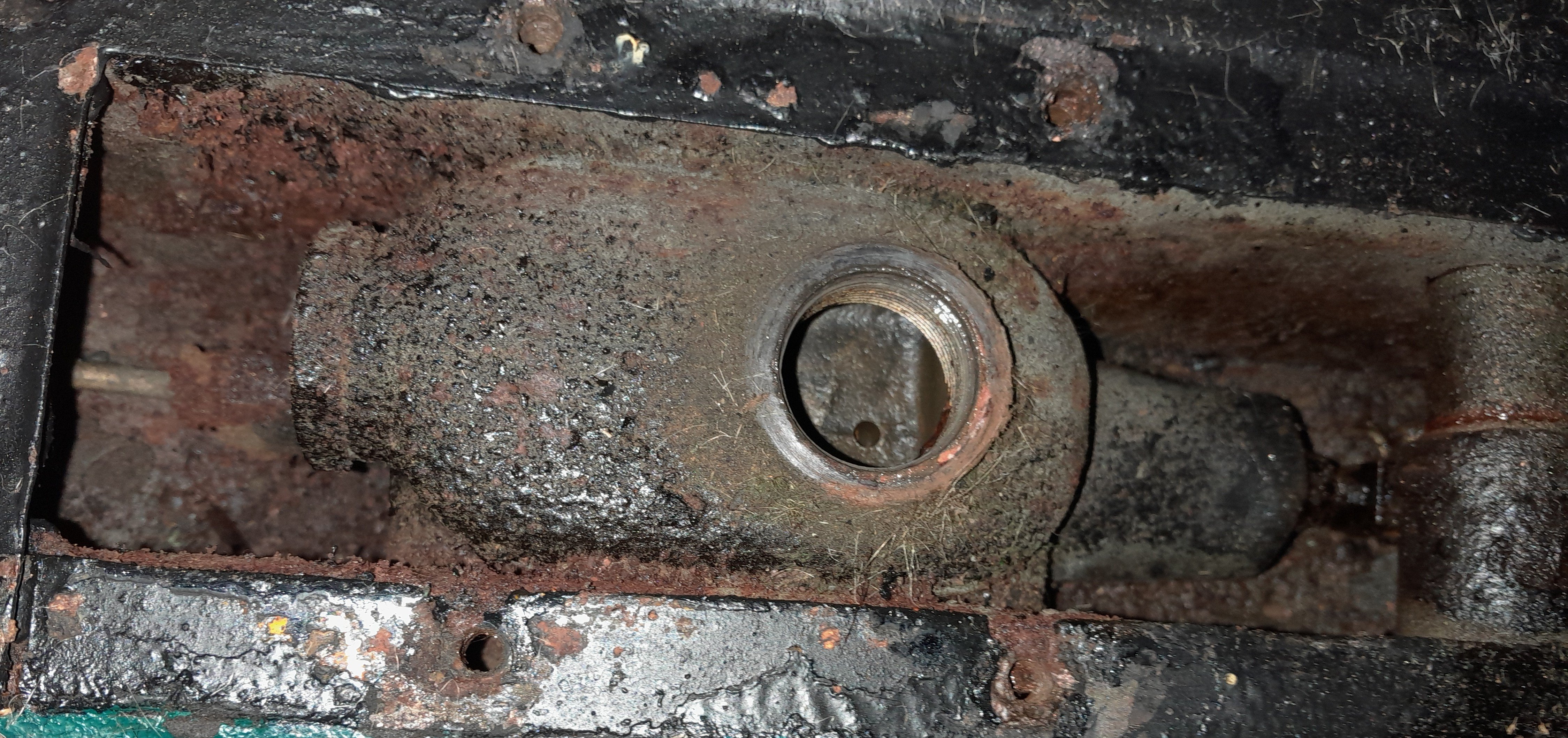
Well it certainly all gone somewhere.....
Take each wheel off and look, though I'd honestly expect to see it running down the back of a wheel ...

If you've got no traces anywhere, you're going to have to do it the practical way, put some fluid in and see where it comes out.
This image looks wet around the linkage....
Re: How much brake pedal resistance should there be?
Posted: Fri Nov 28, 2025 5:01 pm
by Chief
I think any wet look is just the flash of the phone illuminating the glossiness of the overspray from the underseal spray that was used at its last restoration, but I admit that I didn't feel within the cavity for any dampness and went by the phones photos myself (could barely see the master cylinder it was getting so dark) without the phones flashlight.
Since I don't think taking the wheels off in my current condition would be advisable, perhaps filling it up with fluid and pumping the pedal might show some leak that's visible on the ground.
Trouble is, with not having used it for so long I have no idea exactly when this could have happened - all I do know is it happened while standing unused and that it's a good thing about the mention of pressing your pedal regularly to keep your brakes working or it's quite possible my first knowledge of this would have been its first drive after getting the interior back together
Re: How much brake pedal resistance should there be?
Posted: Fri Nov 28, 2025 5:39 pm
by svenedin
Presumably you'd have found out as soon as you started driving out of the garage and at such a low speed a pull on the handbrake would have averted disaster. Probably, you'd not even have left the garage before realising there was something seriously wrong.
How long has the car sat unused?
The fluid must have gone somewhere!
Yes, why not fill up and see where it leaks?
Stephen
Re: How much brake pedal resistance should there be?
Posted: Fri Nov 28, 2025 5:53 pm
by Chief
svenedin wrote: ↑Fri Nov 28, 2025 5:39 pm
How long has the car sat unused?
I'd reckon early 2023 in terms of it being driven, it was run last in Feb. 2024 but that was just in regards to doing the oil so it never actually moved and so never had the brakes applied. Usually when I needed to move it, it was only a few feet so I just pushed it.
Re: How much brake pedal resistance should there be?
Posted: Fri Nov 28, 2025 6:06 pm
by svenedin
Chief wrote: ↑Fri Nov 28, 2025 5:53 pm
svenedin wrote: ↑Fri Nov 28, 2025 5:39 pm
How long has the car sat unused?
I'd reckon early 2023 in terms of it being driven, it was run last in Feb. 2024 but that was just in regards to doing the oil so it never actually moved and so never had the brakes applied. Usually when I needed to move it, it was only a few feet so I just pushed it.
A seal has gone somewhere most likely unless a brake line could have been physically damaged (unlikely).
When you find the cause of the leak I would not stop there but check the entire system meticulously before any thought of venturing out on the road.
Stephen
Re: How much brake pedal resistance should there be?
Posted: Mon Dec 01, 2025 1:11 pm
by Chief
I put in some brake fluid (too much, what's the recommendation for getting brake fluid out of the box section? - paper could only do so much and reach so far, the majority went forwards in the direction of the engine) and pumped the brake pedal multiple times over the course of a few minutes.
There didn't appear to be any leaks from the master cylinder (no new amounts of fluid after my attempts at mopping up or any visible leaks), and looking under the car there were no visible puddles or drips, maybe it needs to feed through the system over time?
I pushed the car forward with the hope of spotting drips if the car was moved, but unfortunately, while I had waited for the rain to stop before doing the above, a new storm came in and I've had to stop my investigation and get the car back under cover again.
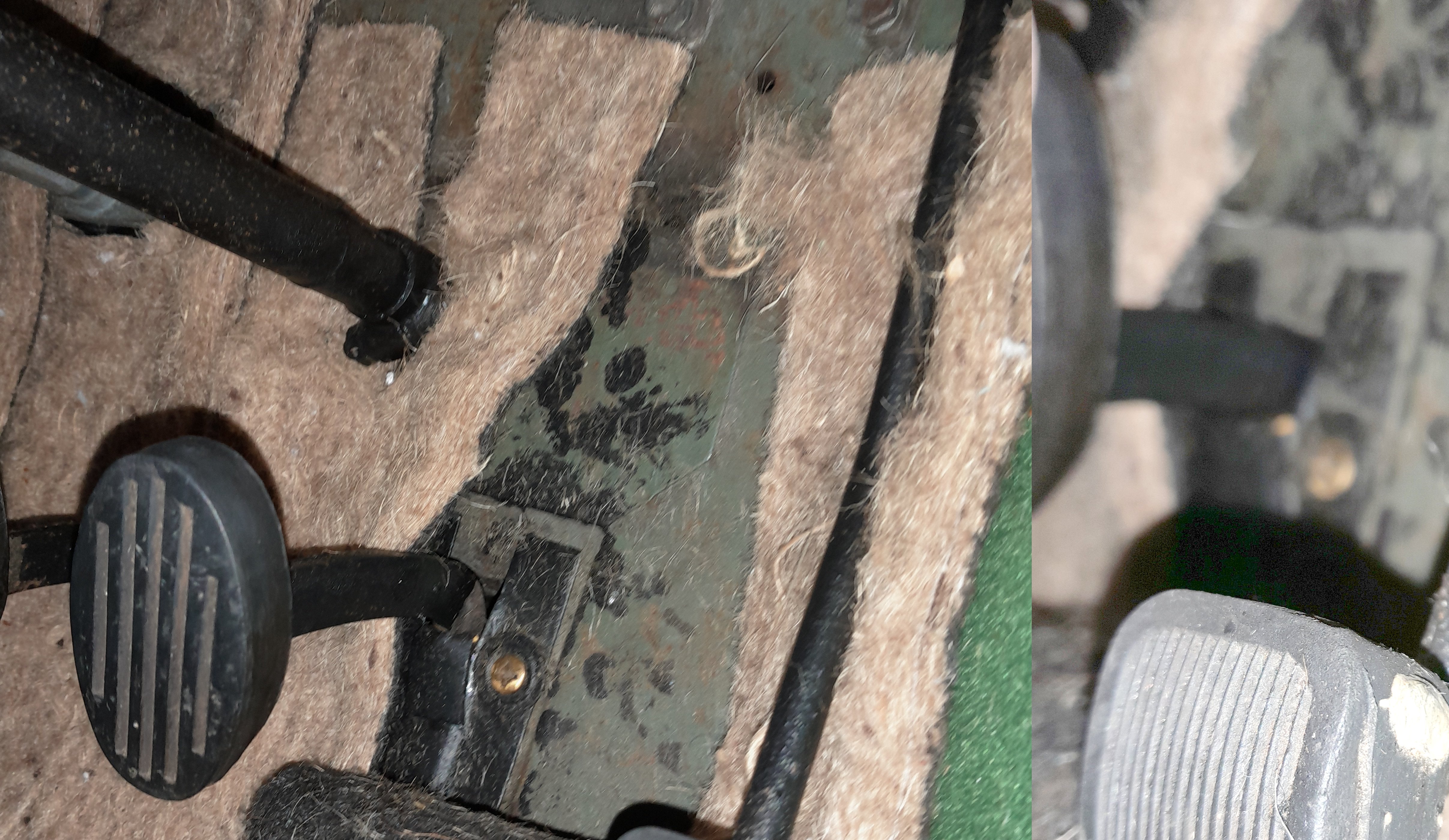
I can say that with fluid in the cylinder I now have an actual stopping point to the brake pedal (the right side of the image shows when it's fully pressed down):
- 20251201_122046.jpg (2.17 MiB) Viewed 51290 times
Re: How much brake pedal resistance should there be?
Posted: Mon Dec 01, 2025 2:13 pm
by ManyMinors
Quite honestly, if it's a decent car and you plan to keep it, I would throw that master cylinder out and fit a new one. It looks as if it hasn't been touched for years
It is a vital part of the car and once replaced and the wheel cylinders all checked and bled through, you should have some confidence in your brakes once more
Re: How much brake pedal resistance should there be?
Posted: Mon Dec 01, 2025 3:33 pm
by mike1864
Don't trust the brakes till they've been properly bled. Bear in mind you won't see a leak on a wheel cylinder or pipe if it contains only air!
By the time you've taken out the master cylinder to dismantle it for inspection of the seal and bore, you might as well replace it.
With such an undiagnosed (and perhaps intermittent) safety fault, personally I'd get an MOT garage to check out the whole issue.
But make sure it's nearby, and not at the bottom of a hill
PS And use a funnel whenever topping up!
Re: How much brake pedal resistance should there be?
Posted: Mon Dec 01, 2025 4:02 pm
by Chief
mike1864 wrote: ↑Mon Dec 01, 2025 3:33 pm
PS And use a funnel whenever topping up!
I did use a funnel, the fluid managed to creep up the outside of the funnel and then merrily cascade out - not something I've experienced before and thanks to the angle I was at, it wasn't immediately apparent that it was happening until I noticed a stream of brake fluid in the box section - at first I thought it meant the master cylinder was leaking until I noticed where it was overflowing from

mike1864 wrote: ↑Mon Dec 01, 2025 3:33 pm
I'd get an MOT garage to check out the whole issue.
As it stands, that would involve paying a recovery firm to deliver it to the garage, since as you say, the brakes aren't currently trustworthy and even if they were working, the local garage would likely refuse to work on it, what with it having no seats, steering wheel, etc.
mike1864 wrote: ↑Mon Dec 01, 2025 3:33 pm
Bear in mind you won't see a leak on a wheel cylinder or pipe if it contains only air!
I had hoped that, inspite of any air, pumping the brakes may have resulted in seeing it squirting out somewhere eventually. I suppose it's possible it would have done if I'd been able to go at it for longer and not had to beat a hasty retreat (after drying the inside of the car) thanks to the rain.
I did notice that although I had over-filled the master cylinder so the level was at the very top of the fillter area and not below it as it should have been, that pumping the brakes dropped the level down to the "correct" level - but as mentioned I never saw any drips or puddles.