Page 4 of 4
Re: Poor Ignition Coil Reliability (thoughts?)
Posted: Thu Aug 20, 2026 5:59 pm
by geoberni
I'll check the temp of Basil's Coil on the next long run he gets, a couple of weeks time, as his Coil had been restored to the original SII position on the bulkhead.
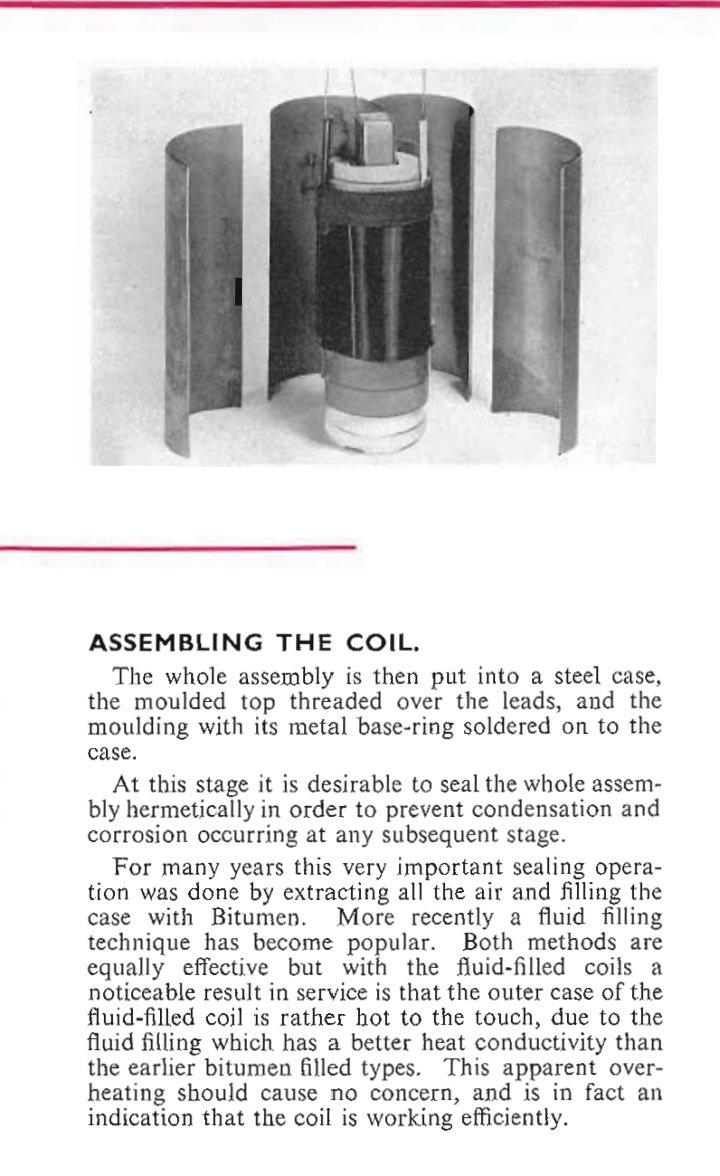
Meanwhile you might be interested in this extract from the Lucas Correspondence Course manual circa 1950s, referencing their switch to oil rather than bitumen in coils...
Classic British terminology....don't you rather think Chaps..

- Screenshot_20260820-174753_Drive.jpg (132.89 KiB) Viewed 393 times
Re: Poor Ignition Coil Reliability (thoughts?)
Posted: Thu Aug 20, 2026 6:12 pm
by svenedin
geoberni wrote: ↑Thu Aug 20, 2026 5:59 pm
I'll check the temp of Basil's Coil on the next long run he gets, a couple of weeks time, as his Coil had been restored to the original SII position on the bulkhead.
Meanwhile you might be interested in this extract from the Lucas Correspondence Course manual circa 1950s, referencing their switch to oil rather than bitumen in coils...
Classic British terminology....don't you rather think Chaps..
Screenshot_20260820-174753_Drive.jpg
I like that very much! "This apparent over-heating should cause no concern, and is in fact an indication that the coil is working efficiently".

The only reason for my (over) concern to be fair, was 3 failed coils open circuit and all the inconvenience and stress of breakdowns! I'll admit it has become something of an obsession.
I was aware that there had been a change from "dry" bitumen filled coils to oil filled but now we are tending to go back to dry with epoxy resin filled coils.
Stephen
Re: Poor Ignition Coil Reliability (thoughts?)
Posted: Thu Aug 20, 2026 6:46 pm
by les
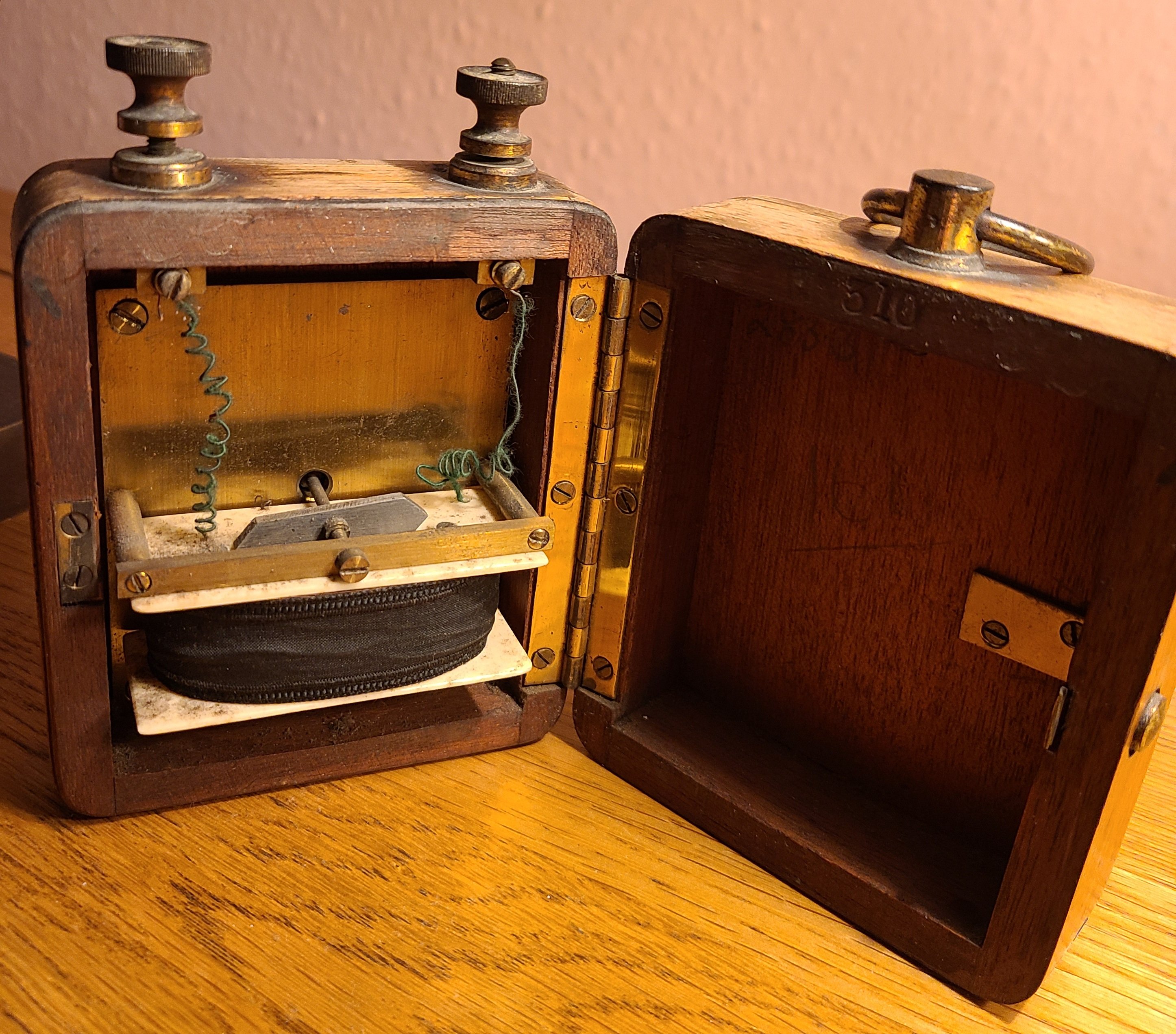
Did anyone notice the dressed screw heads on Bill’s old test piece ? That not luck it’s a conscious effort. Nit picking maybe but nice to see !

Re: Poor Ignition Coil Reliability (thoughts?)
Posted: Thu Aug 20, 2026 7:40 pm
by Bill_qaz
les wrote: ↑Thu Aug 20, 2026 6:46 pm
Did anyone notice the dressed screw heads on Bill’s old test piece ? That not luck it’s a conscious effort. Nit picking maybe but nice to see !
Its quite nice inside as well but dressed screws on outside where seen, shame about cracked glass, it was like that when I bought it but just liked it.
- 20260820_193217.jpg (1.13 MiB) Viewed 336 times
Re: Poor Ignition Coil Reliability (thoughts?)
Posted: Thu Aug 20, 2026 7:45 pm
by svenedin
Bill_qaz wrote: ↑Thu Aug 20, 2026 7:40 pm
les wrote: ↑Thu Aug 20, 2026 6:46 pm
Did anyone notice the dressed screw heads on Bill’s old test piece ? That not luck it’s a conscious effort. Nit picking maybe but nice to see !
Its quite nice inside as well but dressed screws on outside where seen, shame about cracked glass, it was like that when I bought it but just liked it.
20260820_193217.jpg
If you particularly like it, the cracked glass can be replaced. Bevelled glass like that is often used in clocks and there are various suppliers who will make it to measure.
Stephen
Re: Poor Ignition Coil Reliability (thoughts?)
Posted: Fri Aug 21, 2026 10:54 am
by svenedin
A few more tests this morning.
Voltage at the coil is exactly the same as the voltage across the battery terminals, in this case 12.5 volts.
An ammeter in series with the coil ignition live feed to live terminal and the coil connected to earth (I say it this way to avoid earth polarity confusion) gives 3.6 amps. This is with the ignition on (briefly of course) and the engine not running. This is consistent with Ohm's law, 12.5v resistance of coil 3.4 Ohms, current 3.6 amps. So this gives 45 watts but of course the coil is not in circuit 100% of the time unless you leave the ignition on with the engine stopped! With a dwell angle of 65 degrees (figure for Lumention Optronic, on points it is slightly lower) this gives a duty cycle of 72% meaning the coil is in circuit 72% of the time so 32 watts for the whole cycle. It would seem that a great deal of the coil heat is just from the engine and the coil location. Many modern coils seem unable to cope with this despite old coils being able to tolerate it almost indefinitely.
These readings are a more scientific way to confirm what I already knew from observation. With the engine running from cold and the bonnet wide open the coil feels mildly warm and it does not heat up much until the engine is fully hot. Even then the coil doesn't get that hot. It is quite different when the car has been driven, especially in slow moving traffic. Then the coil gets properly hot and so does the dynamo it sits on. The coil temperature actually rises further on switch off because the fan is not moving air and the coolant is no longer circulating, then in time everything cools down. A modern car would run the electric fan after switch off in these circumstances. There is some context of course, the Summer has been exceptionally hot for a very extended period of time. It may have been worth me fitting an extra fan blade under these circumstances. Admittedly that would rob some power and create extra noise for the large part of the year when not required. Perhaps a summer modification only. I'll try next summer if it's a scorcher.
I am now content that I have done the subject to death! Thank you for your patience with me.
Stephen
Re: Poor Ignition Coil Reliability (thoughts?)
Posted: Fri Aug 21, 2026 1:42 pm
by oliver90owner
svenedin wrote: ↑Fri Aug 21, 2026 10:54 am
A few more tests this morning.
Voltage at the coil is exactly the same as the voltage across the battery terminals, in this case 12.5 volts.
An ammeter in series with the coil ignition live feed to live terminal and the coil connected to earth (I say it this way to avoid earth polarity confusion) gives 3.6 amps. This is with the ignition on (briefly of course) and the engine not running. This is consistent with Ohm's law, 12.5v resistance of coil 3.4 Ohms, current 3.6 amps. So this gives 45 watts but of course the coil is not in circuit 100% of the time unless you leave the ignition on with the engine stopped! With a dwell angle of 65 degrees (figure for Lumention Optronic, on points it is slightly lower) this gives a duty cycle of 72% meaning the coil is in circuit 72% of the time so 32 watts for the whole cycle. It would seem that a great deal of the coil heat is just from the engine and the coil location. Many modern coils seem unable to cope with this despite old coils being able to tolerate it almost indefinitely.
These readings are a more scientific way to confirm what I already knew from observation. With the engine running from cold and the bonnet wide open the coil feels mildly warm and it does not heat up much until the engine is fully hot. Even then the coil doesn't get that hot. It is quite different when the car has been driven, especially in slow moving traffic. Then the coil gets properly hot and so does the dynamo it sits on. The coil temperature actually rises further on switch off because the fan is not moving air and the coolant is no longer circulating, then in time everything cools down. A modern car would run the electric fan after switch off in these circumstances. There is some context of course, the Summer has been exceptionally hot for a very extended period of time. It may have been worth me fitting an extra fan blade under these circumstances. Admittedly that would rob some power and create extra noise for the large part of the year when not required. Perhaps a summer modification only. I'll try next summer if it's a scorcher.
I am now content that I have done the subject to death! Thank you for your patience with me.
Stephen
:
Wrong, of course. The coil is an inductive device, so the current will be less than quoted. With the engine running, the time for the feed to the coil is a considerable amount of the dwell angle to raise the voltage and current to that quoted at a continual closed circuit condition, thereby reducing the average power to somewhat below the static resistive calculation.
Indeed, for 8 cylinder engines, the Kettering system was often lacking the dwell time to allow sufficient energy storage in the coil primary winding side to provide a sufficiently energetic spark at higher engine revolutions. Some higher revving engines used separate coils to overcome this issue.
Re: Poor Ignition Coil Reliability (thoughts?)
Posted: Fri Aug 21, 2026 1:56 pm
by svenedin
oliver90owner wrote: ↑Fri Aug 21, 2026 1:42 pm
svenedin wrote: ↑Fri Aug 21, 2026 10:54 am
A few more tests this morning.
Voltage at the coil is exactly the same as the voltage across the battery terminals, in this case 12.5 volts.
An ammeter in series with the coil ignition live feed to live terminal and the coil connected to earth (I say it this way to avoid earth polarity confusion) gives 3.6 amps. This is with the ignition on (briefly of course) and the engine not running. This is consistent with Ohm's law, 12.5v resistance of coil 3.4 Ohms, current 3.6 amps. So this gives 45 watts but of course the coil is not in circuit 100% of the time unless you leave the ignition on with the engine stopped! With a dwell angle of 65 degrees (figure for Lumention Optronic, on points it is slightly lower) this gives a duty cycle of 72% meaning the coil is in circuit 72% of the time so 32 watts for the whole cycle. It would seem that a great deal of the coil heat is just from the engine and the coil location. Many modern coils seem unable to cope with this despite old coils being able to tolerate it almost indefinitely.
These readings are a more scientific way to confirm what I already knew from observation. With the engine running from cold and the bonnet wide open the coil feels mildly warm and it does not heat up much until the engine is fully hot. Even then the coil doesn't get that hot. It is quite different when the car has been driven, especially in slow moving traffic. Then the coil gets properly hot and so does the dynamo it sits on. The coil temperature actually rises further on switch off because the fan is not moving air and the coolant is no longer circulating, then in time everything cools down. A modern car would run the electric fan after switch off in these circumstances. There is some context of course, the Summer has been exceptionally hot for a very extended period of time. It may have been worth me fitting an extra fan blade under these circumstances. Admittedly that would rob some power and create extra noise for the large part of the year when not required. Perhaps a summer modification only. I'll try next summer if it's a scorcher.
I am now content that I have done the subject to death! Thank you for your patience with me.
Stephen
Wrong, of course. The coil is an inductive device, so the current will be less than quoted. With the engine running, the time for the feed to the coil is a considerable amount of the dwell angle to raise the voltage and current to that quoted at a continual closed circuit condition, thereby reducing the average current to somewhat below the static resistive calculation.
Indeed, for 8 cylinder engines, the Kettering system was often lacking the dwell time to allow sufficient energy storage in the coil primary winding side to provide a sufficiently energetic spark at higher engine revolutions. Some higher revving engines used separate coils to overcome this issue.
Rude, of course
Re: Poor Ignition Coil Reliability (thoughts?)
Posted: Fri Aug 21, 2026 1:59 pm
by oliver90owner
svenedin wrote: ↑Fri Aug 21, 2026 1:56 pm
oliver90owner wrote: ↑Fri Aug 21, 2026 1:42 pm
svenedin wrote: ↑Fri Aug 21, 2026 10:54 am
A few more tests this morning.
Voltage at the coil is exactly the same as the voltage across the battery terminals, in this case 12.5 volts.
An ammeter in series with the coil ignition live feed to live terminal and the coil connected to earth (I say it this way to avoid earth polarity confusion) gives 3.6 amps. This is with the ignition on (briefly of course) and the engine not running. This is consistent with Ohm's law, 12.5v resistance of coil 3.4 Ohms, current 3.6 amps. So this gives 45 watts but of course the coil is not in circuit 100% of the time unless you leave the ignition on with the engine stopped! With a dwell angle of 65 degrees (figure for Lumention Optronic, on points it is slightly lower) this gives a duty cycle of 72% meaning the coil is in circuit 72% of the time so 32 watts for the whole cycle. It would seem that a great deal of the coil heat is just from the engine and the coil location. Many modern coils seem unable to cope with this despite old coils being able to tolerate it almost indefinitely.
These readings are a more scientific way to confirm what I already knew from observation. With the engine running from cold and the bonnet wide open the coil feels mildly warm and it does not heat up much until the engine is fully hot. Even then the coil doesn't get that hot. It is quite different when the car has been driven, especially in slow moving traffic. Then the coil gets properly hot and so does the dynamo it sits on. The coil temperature actually rises further on switch off because the fan is not moving air and the coolant is no longer circulating, then in time everything cools down. A modern car would run the electric fan after switch off in these circumstances. There is some context of course, the Summer has been exceptionally hot for a very extended period of time. It may have been worth me fitting an extra fan blade under these circumstances. Admittedly that would rob some power and create extra noise for the large part of the year when not required. Perhaps a summer modification only. I'll try next summer if it's a scorcher.
I am now content that I have done the subject to death! Thank you for your patience with me.
Stephen
Wrong, of course. The coil is an inductive device, so the current will be less than quoted. With the engine running, the time for the feed to the coil is a considerable amount of the dwell angle to raise the voltage and current to that quoted at a continual closed circuit condition, thereby reducing the average current to somewhat below the static resistive calculation.
Indeed, for 8 cylinder engines, the Kettering system was often lacking the dwell time to allow sufficient energy storage in the coil primary winding side to provide a sufficiently energetic spark at higher engine revolutions. Some higher revving engines used separate coils to overcome this issue.
Rude, of course
But factually correct.
Re: Poor Ignition Coil Reliability (thoughts?)
Posted: Fri Aug 21, 2026 2:32 pm
by svenedin
oliver90owner wrote: ↑Fri Aug 21, 2026 1:59 pm
svenedin wrote: ↑Fri Aug 21, 2026 1:56 pm
oliver90owner wrote: ↑Fri Aug 21, 2026 1:42 pm
Wrong, of course. The coil is an inductive device, so the current will be less than quoted. With the engine running, the time for the feed to the coil is a considerable amount of the dwell angle to raise the voltage and current to that quoted at a continual closed circuit condition, thereby reducing the average current to somewhat below the static resistive calculation.
Indeed, for 8 cylinder engines, the Kettering system was often lacking the dwell time to allow sufficient energy storage in the coil primary winding side to provide a sufficiently energetic spark at higher engine revolutions. Some higher revving engines used separate coils to overcome this issue.
Rude, of course
But factually correct.
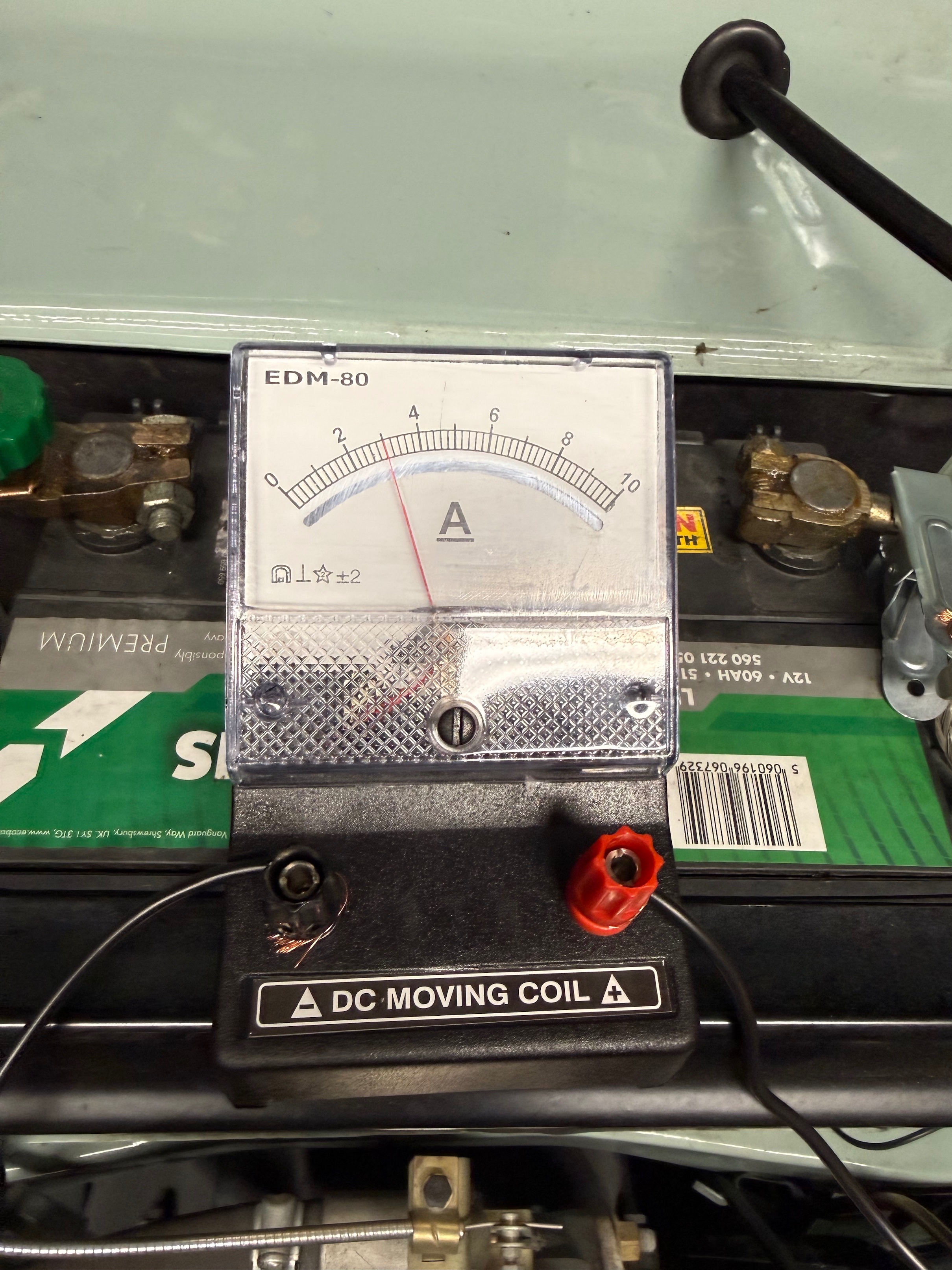
In these measurements (different meter, cheap school-grade ammeter) current through coil with ignition on and engine stopped 3.0 Amps
With engine running 2 Amps. However, the coil is being switched on and off rapidly so what my moving coil ammeter is actually displaying is an average (since it cannot respond fast enough to the rapidly changing current). With a 72% duty cycle the expected average is 3 x 0.72=2.16 amps but what is actually measured is 2.0 amps so is there really any significant effect of the coil being an "inductive device"?
Engine stopped, ignition on
- IMG_3680.jpeg (1.93 MiB) Viewed 146 times
Engine running (video)
https://youtube.com/shorts/MDCnS0ETJg4?feature=share
