Poor Ignition Coil Reliability (thoughts?)

Discuss Electrical problems here.
Forum rules
By using this site, you agree to our rules. Please see: Terms of Use
User avatar
geoberni
Minor Maniac
Posts: 5241
Joined: Fri Aug 04, 2017 11:19 am
Location: North Leicestershire
MMOC Member: Yes

Re: Poor Ignition Coil Reliability (thoughts?)

Post by geoberni »

I'll check the temp of Basil's Coil on the next long run he gets, a couple of weeks time, as his Coil had been restored to the original SII position on the bulkhead.

Meanwhile you might be interested in this extract from the Lucas Correspondence Course manual circa 1950s, referencing their switch to oil rather than bitumen in coils...
Classic British terminology....don't you rather think Chaps..😄

Screenshot_20260820-174753_Drive.jpg
Screenshot_20260820-174753_Drive.jpg (132.89 KiB) Viewed 1430 times
Basil the 1955 series II

Image
User avatar
svenedin
Minor Legend
Posts: 4789
Joined: Fri Aug 29, 2014 9:27 am
Location: Surrey
MMOC Member: Yes

Re: Poor Ignition Coil Reliability (thoughts?)

Post by svenedin »

geoberni wrote: Thu Aug 20, 2026 5:59 pm I'll check the temp of Basil's Coil on the next long run he gets, a couple of weeks time, as his Coil had been restored to the original SII position on the bulkhead.

Meanwhile you might be interested in this extract from the Lucas Correspondence Course manual circa 1950s, referencing their switch to oil rather than bitumen in coils...
Classic British terminology....don't you rather think Chaps..😄


Screenshot_20260820-174753_Drive.jpg
I like that very much! "This apparent over-heating should cause no concern, and is in fact an indication that the coil is working efficiently". :lol:

The only reason for my (over) concern to be fair, was 3 failed coils open circuit and all the inconvenience and stress of breakdowns! I'll admit it has become something of an obsession.

I was aware that there had been a change from "dry" bitumen filled coils to oil filled but now we are tending to go back to dry with epoxy resin filled coils.

Stephen
1969 1098cc Convertible “Xavier” which I have owned since 1989.

Stephen
les
Minor Maniac
Posts: 9699
Joined: Tue Feb 12, 2002 12:00 am
Location: kent
MMOC Member: Yes

Re: Poor Ignition Coil Reliability (thoughts?)

Post by les »

Did anyone notice the dressed screw heads on Bill’s old test piece ? That not luck it’s a conscious effort. Nit picking maybe but nice to see ! :D

User avatar
Bill_qaz
Minor Legend
Posts: 2261
Joined: Fri Jan 14, 2022 7:31 pm
Location: Oxfordshire
MMOC Member: Yes

Re: Poor Ignition Coil Reliability (thoughts?)

Post by Bill_qaz »

les wrote: Thu Aug 20, 2026 6:46 pm Did anyone notice the dressed screw heads on Bill’s old test piece ? That not luck it’s a conscious effort. Nit picking maybe but nice to see ! :D
Its quite nice inside as well but dressed screws on outside where seen, shame about cracked glass, it was like that when I bought it but just liked it.
20260820_193217.jpg
20260820_193217.jpg (1.13 MiB) Viewed 1374 times
Regards Bill
User avatar
svenedin
Minor Legend
Posts: 4789
Joined: Fri Aug 29, 2014 9:27 am
Location: Surrey
MMOC Member: Yes

Re: Poor Ignition Coil Reliability (thoughts?)

Post by svenedin »

Bill_qaz wrote: Thu Aug 20, 2026 7:40 pm
les wrote: Thu Aug 20, 2026 6:46 pm Did anyone notice the dressed screw heads on Bill’s old test piece ? That not luck it’s a conscious effort. Nit picking maybe but nice to see ! :D
Its quite nice inside as well but dressed screws on outside where seen, shame about cracked glass, it was like that when I bought it but just liked it.
20260820_193217.jpg
If you particularly like it, the cracked glass can be replaced. Bevelled glass like that is often used in clocks and there are various suppliers who will make it to measure.

Stephen
1969 1098cc Convertible “Xavier” which I have owned since 1989.

Stephen
User avatar
svenedin
Minor Legend
Posts: 4789
Joined: Fri Aug 29, 2014 9:27 am
Location: Surrey
MMOC Member: Yes

Re: Poor Ignition Coil Reliability (thoughts?)

Post by svenedin »

A few more tests this morning.

Voltage at the coil is exactly the same as the voltage across the battery terminals, in this case 12.5 volts.

An ammeter in series with the coil ignition live feed to live terminal and the coil connected to earth (I say it this way to avoid earth polarity confusion) gives 3.6 amps. This is with the ignition on (briefly of course) and the engine not running. This is consistent with Ohm's law, 12.5v resistance of coil 3.4 Ohms, current 3.6 amps. So this gives 45 watts but of course the coil is not in circuit 100% of the time unless you leave the ignition on with the engine stopped! With a dwell angle of 65 degrees (figure for Lumention Optronic, on points it is slightly lower) this gives a duty cycle of 72% meaning the coil is in circuit 72% of the time so 32 watts for the whole cycle. It would seem that a great deal of the coil heat is just from the engine and the coil location. Many modern coils seem unable to cope with this despite old coils being able to tolerate it almost indefinitely.

These readings are a more scientific way to confirm what I already knew from observation. With the engine running from cold and the bonnet wide open the coil feels mildly warm and it does not heat up much until the engine is fully hot. Even then the coil doesn't get that hot. It is quite different when the car has been driven, especially in slow moving traffic. Then the coil gets properly hot and so does the dynamo it sits on. The coil temperature actually rises further on switch off because the fan is not moving air and the coolant is no longer circulating, then in time everything cools down. A modern car would run the electric fan after switch off in these circumstances. There is some context of course, the Summer has been exceptionally hot for a very extended period of time. It may have been worth me fitting an extra fan blade under these circumstances. Admittedly that would rob some power and create extra noise for the large part of the year when not required. Perhaps a summer modification only. I'll try next summer if it's a scorcher.

I am now content that I have done the subject to death! Thank you for your patience with me.

Stephen
1969 1098cc Convertible “Xavier” which I have owned since 1989.

Stephen
oliver90owner
Minor Legend
Posts: 1903
Joined: Thu May 12, 2016 6:33 am
MMOC Member: No

Re: Poor Ignition Coil Reliability (thoughts?)

Post by oliver90owner »

svenedin wrote: Fri Aug 21, 2026 10:54 am A few more tests this morning.

Voltage at the coil is exactly the same as the voltage across the battery terminals, in this case 12.5 volts.

An ammeter in series with the coil ignition live feed to live terminal and the coil connected to earth (I say it this way to avoid earth polarity confusion) gives 3.6 amps. This is with the ignition on (briefly of course) and the engine not running. This is consistent with Ohm's law, 12.5v resistance of coil 3.4 Ohms, current 3.6 amps. So this gives 45 watts but of course the coil is not in circuit 100% of the time unless you leave the ignition on with the engine stopped! With a dwell angle of 65 degrees (figure for Lumention Optronic, on points it is slightly lower) this gives a duty cycle of 72% meaning the coil is in circuit 72% of the time so 32 watts for the whole cycle. It would seem that a great deal of the coil heat is just from the engine and the coil location. Many modern coils seem unable to cope with this despite old coils being able to tolerate it almost indefinitely.

These readings are a more scientific way to confirm what I already knew from observation. With the engine running from cold and the bonnet wide open the coil feels mildly warm and it does not heat up much until the engine is fully hot. Even then the coil doesn't get that hot. It is quite different when the car has been driven, especially in slow moving traffic. Then the coil gets properly hot and so does the dynamo it sits on. The coil temperature actually rises further on switch off because the fan is not moving air and the coolant is no longer circulating, then in time everything cools down. A modern car would run the electric fan after switch off in these circumstances. There is some context of course, the Summer has been exceptionally hot for a very extended period of time. It may have been worth me fitting an extra fan blade under these circumstances. Admittedly that would rob some power and create extra noise for the large part of the year when not required. Perhaps a summer modification only. I'll try next summer if it's a scorcher.

I am now content that I have done the subject to death! Thank you for your patience with me.

Stephen
:


Wrong, of course. The coil is an inductive device, so the current will be less than quoted. With the engine running, the time for the feed to the coil is a considerable amount of the dwell angle to raise the voltage and current to that quoted at a continual closed circuit condition, thereby reducing the average power to somewhat below the static resistive calculation.

Indeed, for 8 cylinder engines, the Kettering system was often lacking the dwell time to allow sufficient energy storage in the coil primary winding side to provide a sufficiently energetic spark at higher engine revolutions. Some higher revving engines used separate coils to overcome this issue.
Last edited by oliver90owner on Fri Aug 21, 2026 1:56 pm, edited 1 time in total.
User avatar
svenedin
Minor Legend
Posts: 4789
Joined: Fri Aug 29, 2014 9:27 am
Location: Surrey
MMOC Member: Yes

Re: Poor Ignition Coil Reliability (thoughts?)

Post by svenedin »

oliver90owner wrote: Fri Aug 21, 2026 1:42 pm
svenedin wrote: Fri Aug 21, 2026 10:54 am A few more tests this morning.

Voltage at the coil is exactly the same as the voltage across the battery terminals, in this case 12.5 volts.

An ammeter in series with the coil ignition live feed to live terminal and the coil connected to earth (I say it this way to avoid earth polarity confusion) gives 3.6 amps. This is with the ignition on (briefly of course) and the engine not running. This is consistent with Ohm's law, 12.5v resistance of coil 3.4 Ohms, current 3.6 amps. So this gives 45 watts but of course the coil is not in circuit 100% of the time unless you leave the ignition on with the engine stopped! With a dwell angle of 65 degrees (figure for Lumention Optronic, on points it is slightly lower) this gives a duty cycle of 72% meaning the coil is in circuit 72% of the time so 32 watts for the whole cycle. It would seem that a great deal of the coil heat is just from the engine and the coil location. Many modern coils seem unable to cope with this despite old coils being able to tolerate it almost indefinitely.

These readings are a more scientific way to confirm what I already knew from observation. With the engine running from cold and the bonnet wide open the coil feels mildly warm and it does not heat up much until the engine is fully hot. Even then the coil doesn't get that hot. It is quite different when the car has been driven, especially in slow moving traffic. Then the coil gets properly hot and so does the dynamo it sits on. The coil temperature actually rises further on switch off because the fan is not moving air and the coolant is no longer circulating, then in time everything cools down. A modern car would run the electric fan after switch off in these circumstances. There is some context of course, the Summer has been exceptionally hot for a very extended period of time. It may have been worth me fitting an extra fan blade under these circumstances. Admittedly that would rob some power and create extra noise for the large part of the year when not required. Perhaps a summer modification only. I'll try next summer if it's a scorcher.

I am now content that I have done the subject to death! Thank you for your patience with me.

Stephen

Wrong, of course. The coil is an inductive device, so the current will be less than quoted. With the engine running, the time for the feed to the coil is a considerable amount of the dwell angle to raise the voltage and current to that quoted at a continual closed circuit condition, thereby reducing the average current to somewhat below the static resistive calculation.

Indeed, for 8 cylinder engines, the Kettering system was often lacking the dwell time to allow sufficient energy storage in the coil primary winding side to provide a sufficiently energetic spark at higher engine revolutions. Some higher revving engines used separate coils to overcome this issue.
Rude, of course
1969 1098cc Convertible “Xavier” which I have owned since 1989.

Stephen
oliver90owner
Minor Legend
Posts: 1903
Joined: Thu May 12, 2016 6:33 am
MMOC Member: No

Re: Poor Ignition Coil Reliability (thoughts?)

Post by oliver90owner »

svenedin wrote: Fri Aug 21, 2026 1:56 pm
oliver90owner wrote: Fri Aug 21, 2026 1:42 pm
svenedin wrote: Fri Aug 21, 2026 10:54 am A few more tests this morning.

Voltage at the coil is exactly the same as the voltage across the battery terminals, in this case 12.5 volts.

An ammeter in series with the coil ignition live feed to live terminal and the coil connected to earth (I say it this way to avoid earth polarity confusion) gives 3.6 amps. This is with the ignition on (briefly of course) and the engine not running. This is consistent with Ohm's law, 12.5v resistance of coil 3.4 Ohms, current 3.6 amps. So this gives 45 watts but of course the coil is not in circuit 100% of the time unless you leave the ignition on with the engine stopped! With a dwell angle of 65 degrees (figure for Lumention Optronic, on points it is slightly lower) this gives a duty cycle of 72% meaning the coil is in circuit 72% of the time so 32 watts for the whole cycle. It would seem that a great deal of the coil heat is just from the engine and the coil location. Many modern coils seem unable to cope with this despite old coils being able to tolerate it almost indefinitely.

These readings are a more scientific way to confirm what I already knew from observation. With the engine running from cold and the bonnet wide open the coil feels mildly warm and it does not heat up much until the engine is fully hot. Even then the coil doesn't get that hot. It is quite different when the car has been driven, especially in slow moving traffic. Then the coil gets properly hot and so does the dynamo it sits on. The coil temperature actually rises further on switch off because the fan is not moving air and the coolant is no longer circulating, then in time everything cools down. A modern car would run the electric fan after switch off in these circumstances. There is some context of course, the Summer has been exceptionally hot for a very extended period of time. It may have been worth me fitting an extra fan blade under these circumstances. Admittedly that would rob some power and create extra noise for the large part of the year when not required. Perhaps a summer modification only. I'll try next summer if it's a scorcher.

I am now content that I have done the subject to death! Thank you for your patience with me.

Stephen

Wrong, of course. The coil is an inductive device, so the current will be less than quoted. With the engine running, the time for the feed to the coil is a considerable amount of the dwell angle to raise the voltage and current to that quoted at a continual closed circuit condition, thereby reducing the average current to somewhat below the static resistive calculation.

Indeed, for 8 cylinder engines, the Kettering system was often lacking the dwell time to allow sufficient energy storage in the coil primary winding side to provide a sufficiently energetic spark at higher engine revolutions. Some higher revving engines used separate coils to overcome this issue.
Rude, of course
But factually correct.
User avatar
svenedin
Minor Legend
Posts: 4789
Joined: Fri Aug 29, 2014 9:27 am
Location: Surrey
MMOC Member: Yes

Re: Poor Ignition Coil Reliability (thoughts?)

Post by svenedin »

oliver90owner wrote: Fri Aug 21, 2026 1:59 pm
svenedin wrote: Fri Aug 21, 2026 1:56 pm
oliver90owner wrote: Fri Aug 21, 2026 1:42 pm


Wrong, of course. The coil is an inductive device, so the current will be less than quoted. With the engine running, the time for the feed to the coil is a considerable amount of the dwell angle to raise the voltage and current to that quoted at a continual closed circuit condition, thereby reducing the average current to somewhat below the static resistive calculation.

Indeed, for 8 cylinder engines, the Kettering system was often lacking the dwell time to allow sufficient energy storage in the coil primary winding side to provide a sufficiently energetic spark at higher engine revolutions. Some higher revving engines used separate coils to overcome this issue.
Rude, of course
But factually correct.
In these measurements (different meter, cheap school-grade ammeter) current through coil with ignition on and engine stopped 3.0 Amps

With engine running 2 Amps. However, the coil is being switched on and off rapidly so what my moving coil ammeter is actually displaying is an average (since it cannot respond fast enough to the rapidly changing current). With a 72% duty cycle the expected average is 3 x 0.72=2.16 amps but what is actually measured is 2.0 amps so is there really any significant effect of the coil being an "inductive device"?

Engine stopped, ignition on
IMG_3680.jpeg
IMG_3680.jpeg (1.93 MiB) Viewed 1184 times

Engine running (video)

https://youtube.com/shorts/MDCnS0ETJg4?feature=share
1969 1098cc Convertible “Xavier” which I have owned since 1989.

Stephen
User avatar
Bill_qaz
Minor Legend
Posts: 2261
Joined: Fri Jan 14, 2022 7:31 pm
Location: Oxfordshire
MMOC Member: Yes

Re: Poor Ignition Coil Reliability (thoughts?)

Post by Bill_qaz »

OH come on Stephen get an oscilloscope and do it properly to satisfy the pedant :lol:
Regards Bill
User avatar
Bill_qaz
Minor Legend
Posts: 2261
Joined: Fri Jan 14, 2022 7:31 pm
Location: Oxfordshire
MMOC Member: Yes

Re: Poor Ignition Coil Reliability (thoughts?)

Post by Bill_qaz »

svenedin wrote: Thu Aug 20, 2026 7:45 pm
Bill_qaz wrote: Thu Aug 20, 2026 7:40 pm
les wrote: Thu Aug 20, 2026 6:46 pm Did anyone notice the dressed screw heads on Bill’s old test piece ? That not luck it’s a conscious effort. Nit picking maybe but nice to see ! :D
Its quite nice inside as well but dressed screws on outside where seen, shame about cracked glass, it was like that when I bought it but just liked it.
20260820_193217.jpg
If you particularly like it, the cracked glass can be replaced. Bevelled glass like that is often used in clocks and there are various suppliers who will make it to measure.

Stephen
Thanks Stephen. The crack is part of its history so I wouldn't replace it.
Here is another old meter but from a later period.
20260821_191331.jpg
20260821_191331.jpg (949.02 KiB) Viewed 1016 times
Regards Bill
User avatar
svenedin
Minor Legend
Posts: 4789
Joined: Fri Aug 29, 2014 9:27 am
Location: Surrey
MMOC Member: Yes

Re: Poor Ignition Coil Reliability (thoughts?)

Post by svenedin »

Bill_qaz wrote: Fri Aug 21, 2026 7:01 pm OH come on Stephen get an oscilloscope and do it properly to satisfy the pedant :lol:
I do have an oscilloscope actually. Seriously! I'm not sure I want to use it in the garage though........

Stephen
1969 1098cc Convertible “Xavier” which I have owned since 1989.

Stephen
User avatar
svenedin
Minor Legend
Posts: 4789
Joined: Fri Aug 29, 2014 9:27 am
Location: Surrey
MMOC Member: Yes

Re: Poor Ignition Coil Reliability (thoughts?)

Post by svenedin »

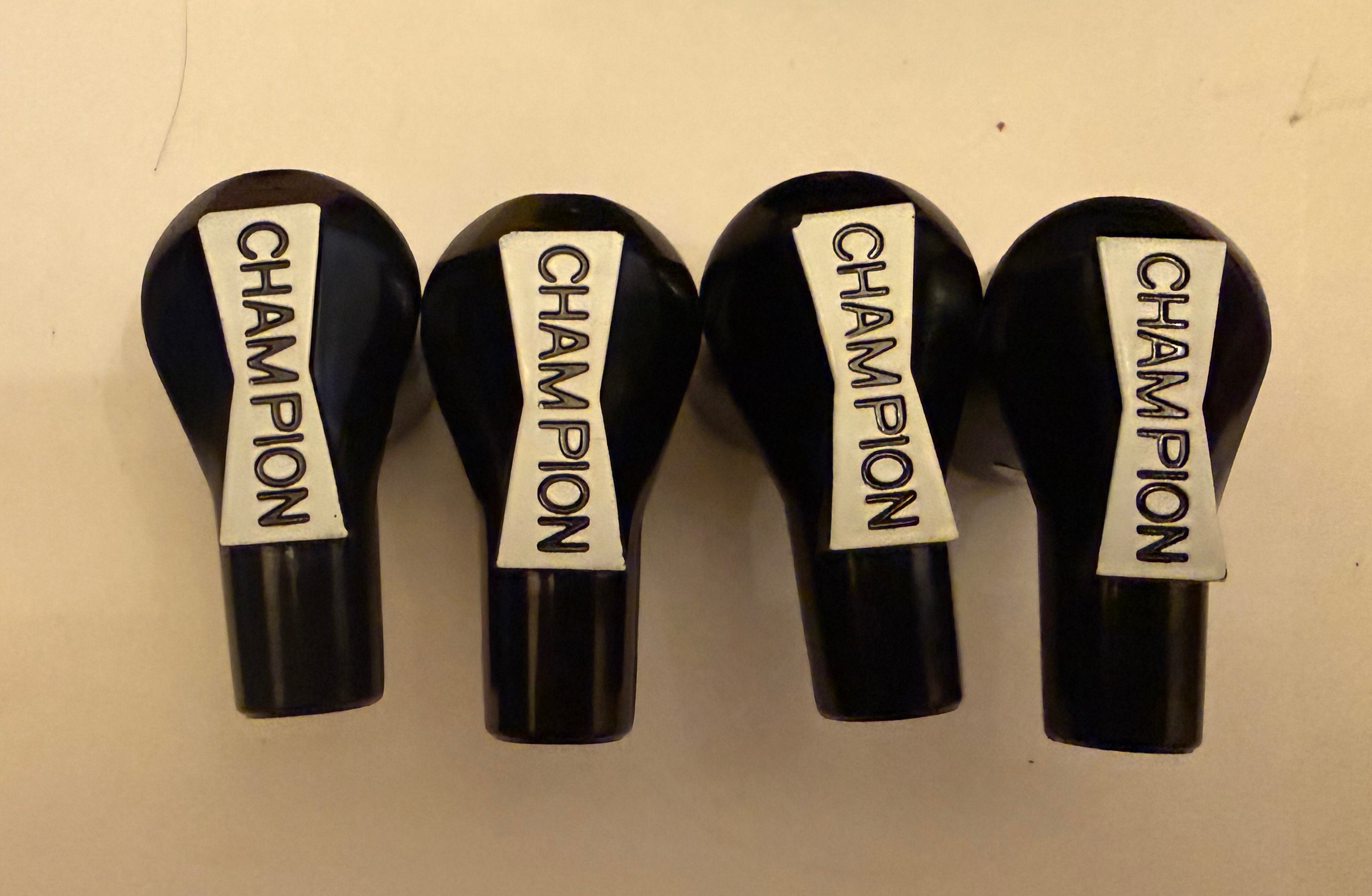
Never take anything for granted. New set of screw in spark plug caps from a reputable ignition supplier that is well known. 10 K ohm resistive caps. A bit higher than necessary (5 K Ohm would do) but they look good.

Made up a new set of leads. Started car, seemed ok. Test drive and it misfired under acceleration at a roundabout. Oh dear I thought. Got home, tested the leads by measuring from the terminal post inside the distributor to the metal inside the spark plug cap. Open circuit. Tried another lead, all the same. Took the caps off, the same thing open circuit. Found a 5 K Ohm cap I had in the garage; absolutely fine.

All 4 brand new caps, open circuit. Complete rubbish. Sometimes it's like being gaslit by the quality of classic car spare parts. It makes me think I am going totally mad until finally I realise the part never worked properly in the first place.

Edit: I found an old one of these in shabby condition in the garage. It reads way out of spec at 53 K Ohms. I tested the new ones again and definitely open circuit. I would not recommend these spark plug caps.

Stephen
IMG_3682.jpeg
IMG_3682.jpeg (1011.07 KiB) Viewed 992 times
Last edited by svenedin on Fri Aug 21, 2026 11:58 pm, edited 1 time in total.
1969 1098cc Convertible “Xavier” which I have owned since 1989.

Stephen

User avatar
Bill_qaz
Minor Legend
Posts: 2261
Joined: Fri Jan 14, 2022 7:31 pm
Location: Oxfordshire
MMOC Member: Yes

Re: Poor Ignition Coil Reliability (thoughts?)

Post by Bill_qaz »

I take it your meter can measure 10K ohms and the cap resistance isn't too high for your meter, so shows OC
Regards Bill
User avatar
svenedin
Minor Legend
Posts: 4789
Joined: Fri Aug 29, 2014 9:27 am
Location: Surrey
MMOC Member: Yes

Re: Poor Ignition Coil Reliability (thoughts?)

Post by svenedin »

Bill_qaz wrote: Fri Aug 21, 2026 10:22 pm I take it your meter can measure 10K ohms and the cap resistance isn't too high for your meter, so shows OC
Yes it can read into the Megaohm range. With the appropriate range selected my 5 K Ohm caps test perfectly but all 4 of the Champion 10 K Ohm caps are open circuit. I have requested that the supplier takes them back for testing. I should imagine he will be testing his stock....

Really it's easier to buy a set of Lucas ready made leads for side entry distributor cap. They can be adjusted for length if required at the end that goes into the distributor cap and no crimping or messing about required. I just don't like carbon string leads very much as they are not known for longevity. If you use a strobe for timing, the fully suppressed leads are actually much better to get a clean signal and you are less likely to get an unexpected high voltage shock whilst tinkering. Out of interest my car, 1969 has always used the side entry cap. According to Google the top-entry cap was a transition in the late 60's to early 70's. I remember the original ex-factory HT leads which had deadly unprotected copper spark plug connectors. The first time I touched one of those with a spanner in my hand I will never forget :lol:


Stephen
1969 1098cc Convertible “Xavier” which I have owned since 1989.

Stephen
User avatar
svenedin
Minor Legend
Posts: 4789
Joined: Fri Aug 29, 2014 9:27 am
Location: Surrey
MMOC Member: Yes

Re: Poor Ignition Coil Reliability (thoughts?)

Post by svenedin »

The old set of spark plug caps. These are Champion WCX600 which came from a major Morris Minor Supplier about 3 or 4 years ago. The only reason I was replacing them was that some careless person at a garage (not me) got paint overspray on them and then wiped them with thinners stripping the white paint off. I had intended to tidy them up but they'll be going in the bin now.

I tested the resistance of the caps on their own and to my alarm I found:

1) 53 KΩ 2) 69 KΩ 3) 232 KΩ 4) 11.9 MΩ (yes 11.9 million Ohms)

The stated resistance of these caps is 10 KΩ so obviously they are drastically higher resistance than they should be. I will never use these again.

Excessive resistance in the HT circuit can cause a weak spark or in extreme cases no spark at all. When the coil is switched off (either by the points opening or an electronic ignition doing the switching electronically) the magnetic field collapses and a large high voltage spike is produced. The electricity will jump the spark plug gap as soon as the voltage is high enough. If the spark plug gap is too wide or there is excessive resistance in the HT circuit then the voltage must rise much higher than normal. This would cause the coil to work far harder and overheat. So with all the other considerations, this is another reason why a coil can overheat.

Stephen

IMG_3683.jpeg
IMG_3683.jpeg (730.93 KiB) Viewed 790 times
1969 1098cc Convertible “Xavier” which I have owned since 1989.

Stephen
Mervin
Minor Fan
Posts: 228
Joined: Mon Jan 27, 2025 11:02 am
Location: Staffordshire Moorlands
MMOC Member: No

Re: Poor Ignition Coil Reliability (thoughts?)

Post by Mervin »

Those "dodgy" caps are probably made in some far away Republic, similar to some other ignition products which are put in a "Lucas" box.
User avatar
svenedin
Minor Legend
Posts: 4789
Joined: Fri Aug 29, 2014 9:27 am
Location: Surrey
MMOC Member: Yes

Re: Poor Ignition Coil Reliability (thoughts?)

Post by svenedin »

Mervin wrote: Sat Aug 22, 2026 11:44 am Those "dodgy" caps are probably made in some far away Republic, similar to some other ignition products which are put in a "Lucas" box.
Yes. There is quite a lot of discussion about these on the Jaguar forums. Apparently they originally had a carbon resistor which looks a bit like a piece of thick pencil lead. These lasted for decades and they didn't drift much from the specified resistance. The modern ones have something far more complicated that is totally unsuitable, some kind of metalised film resistor over a ceramic core. They're expensive for what they are and useless for their intended purpose. They do look very nice at a car show but they are nothing but ornaments. Maybe I'll turn them into Christmas tree decorations :lol:

Stephen
1969 1098cc Convertible “Xavier” which I have owned since 1989.

Stephen

User avatar
Bill_qaz
Minor Legend
Posts: 2261
Joined: Fri Jan 14, 2022 7:31 pm
Location: Oxfordshire
MMOC Member: Yes

Re: Poor Ignition Coil Reliability (thoughts?)

Post by Bill_qaz »

Stephen, as the resistance plug caps are purely to suppress interference and nothing to do with engine performance.
Could you not fit non suppressed plug caps,readily available, as there are no electronics to be interfered with on your minor
Regards Bill
Post Reply